Transport of Radioactive Materials
Designed to IAEA radiation safety standardsTransport of Radioactive Materials Training — Drivers
Also available on request, including in-house at your own site.Also known as: Class 7 Dangerous Goods · Ministerial Decision 11/2025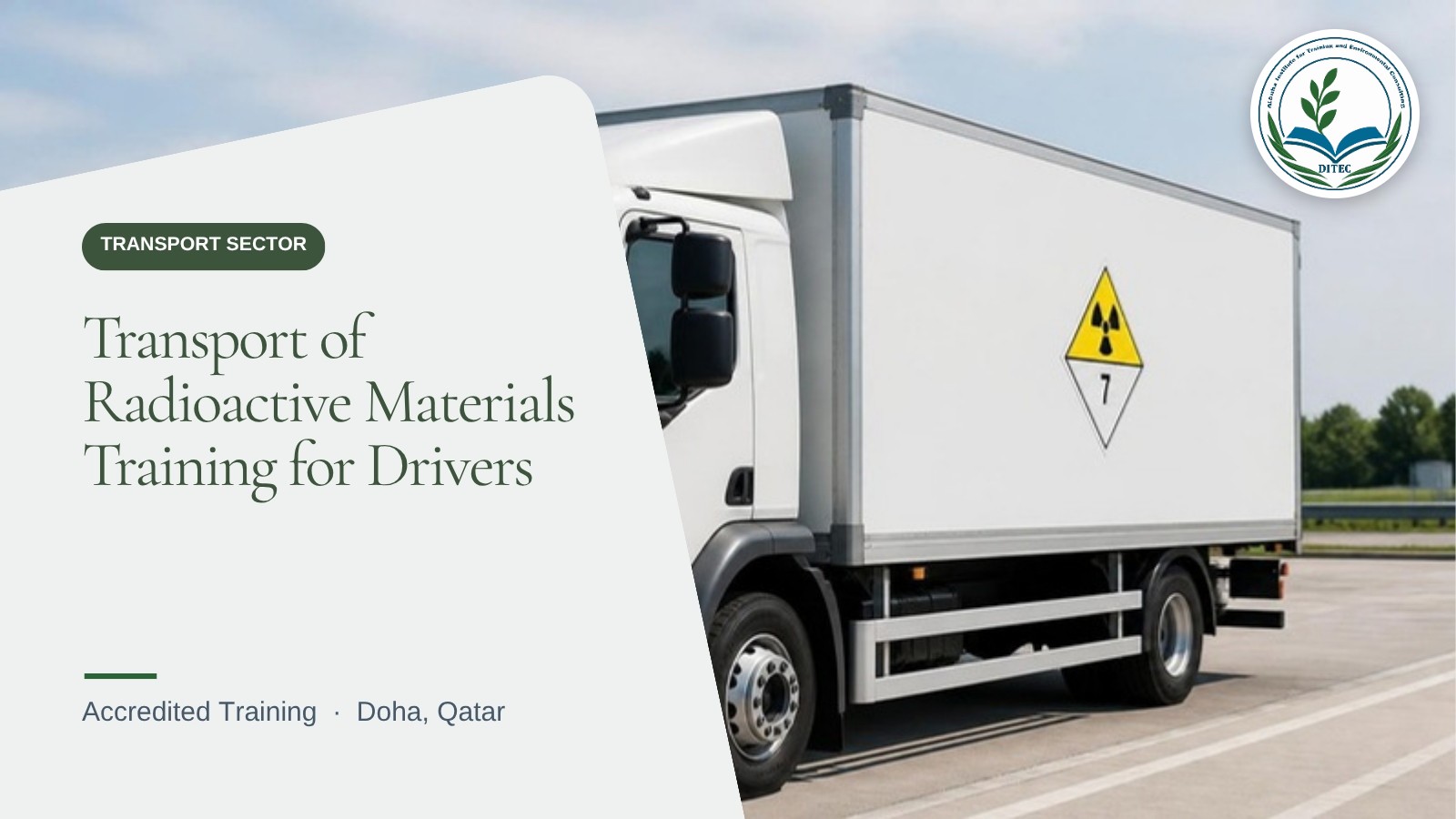
 Duration
One day
Saturday and Thursday, weekly
 Who it is for
Drivers and escorts
Anyone moving a source on a public road
 Certificate
QR-verifiable
Issued by ALDuha Institute and verifiable on this site
Upcoming dates
- 10 October 2026 — One day: Saturday 10 October 2026.
- 15 October 2026 — One day: Thursday 15 October 2026.
- 17 October 2026 — One day: Saturday 17 October 2026.
- 22 October 2026 — One day: Thursday 22 October 2026.
- 24 October 2026 — One day: Saturday 24 October 2026.
- 29 October 2026 — One day: Thursday 29 October 2026.
- 31 October 2026 — One day: Saturday 31 October 2026.
- 5 November 2026 — One day: Thursday 5 November 2026.
- 7 November 2026 — One day: Saturday 7 November 2026.
- 12 November 2026 — One day: Thursday 12 November 2026.
- 14 November 2026 — One day: Saturday 14 November 2026.
- 19 November 2026 — One day: Thursday 19 November 2026.
 Programme overview
Does a driver carrying a radioactive source in Qatar need a certificate, and what does the traffic stop look like? A vehicle carrying a sealed source is carrying a regulated consignment: it needs the right package, the right labels and placards, the right paperwork in the cab, and a driver who knows what to do if the vehicle is hit, breaks down, or the package is damaged. This one-day programme prepares the driver and the escort for exactly that, and it is built on IAEA SSR-6 and the Qatari requirements in force.
 A specialised radiation protection training programme
 Course content
 What makes a consignment radioactive in the eyes of the regulation: activity concentration, exemption values, UN numbers and the classification of the material being carried.
Package types and what each one is allowed to carry: excepted packages, industrial packages, Type A and Type B — and why an Ir-192 projector travels in a Type B container.
Labels, placards and the numbers on them: categories I-WHITE, II-YELLOW and III-YELLOW, the Transport Index, and the surface and one-metre dose rate limits that decide the category.
The documents that must be in the cab: transport approval, consignor declaration, package certificate, emergency instructions and contact numbers — and what an inspector asks to see first.
The vehicle itself: securing and segregating the package, separation distance from the driver's seat, no passengers, fire extinguisher, and the checks made before moving off.
Route, timing and stops: planning the route, avoiding prolonged stops in populated areas, where the vehicle may be parked, and never leaving the consignment unattended.
On the road when it goes wrong: a collision, a fire, a breakdown, a damaged or leaking package — securing a 30-metre cordon, who to call in what order, and what the driver must never attempt.
 Who should attend
Drivers carrying sealed sources between sites, stores and client facilities.
Escorts and radiography crews who travel with the projector.
Logistics and dispatch staff who prepare consignments and paperwork.
Store keepers who release and receive packages.
Safety officers responsible for transport arrangements.
 What you leave with
A certificate of completion from ALDuha Institute, verifiable by QR code on this website.
A pre-departure checklist the driver can keep in the vehicle.
A one-page emergency card: the cordon, the calls, and the first ten minutes.
The ability to read a label and know the Transport Index and category without asking.
 Regulatory basis
IAEA SSR-6 — Regulations for the Safe Transport of Radioactive Material.
Decree-Law 31 of 2002 and Executive Bylaw 4 of 2003 — State of Qatar.
Radiation Protection Department requirements for transport approvals and escorting.
Frequently asked questions
How long is the course?
One day — Saturday and Thursday, weekly