Engineering & Radiation Protection Consulting Services

Home / Engineering & Radiation Protection Consulting Services

Engineering & Radiation Protection Consulting Services

Comprehensive training, consulting, and equipment services to ensure radiation safety and environmental compliance.

1. About the Consulting Division

1. About the Consulting Division

The Engineering Consulting Division at ALDuha Institute for Training and Environmental Consulting (DITEC) brings together specialist radiation safety expertise in the State of Qatar. Operating under Radiation Protection Department Approval No. 15/2026 (valid to 05-10-2027), we bridge the gap between complex regulatory requirements and practical operational safety.

Our division is staffed exclusively by PhD-level experts and senior consultants, each possessing between 15 to 20+ years of specialized experience in fields such as radiation physics, medical physics, nuclear engineering, and NORM (Naturally Occurring Radioactive Material) management. This depth of knowledge ensures that every project we undertake is rigorously analyzed and engineered to the highest standards.

We are dedicated to protecting people and the environment from the harmful effects of ionizing radiation. Our solutions are not just compliant; they are optimized for safety, cost-efficiency, and operational excellence. Whether designing a high-energy industrial bunker or a precision medical imaging suite, DITEC delivers engineering precision you can trust.

Compliance & Standards

    All consulting services provided by DITEC are strictly aligned with national and international regulatory frameworks. We ensure full compliance with:

  • Qatar Ministry of Environment & Climate Change (MoECC) Regulations
  • US Nuclear Regulatory Commission (NRC) Guidelines
  • International Atomic Energy Agency (IAEA) Safety Standards (GSR Part 3, GSR Part 5)
  • US Environmental Protection Agency (EPA) Standards

2. Core Consulting Services

2.1 Radiation Shielding Design & Calculations

DITEC provides comprehensive shielding design services for all types of medical and industrial radiation facilities. Our calculations ensure safety for staff, patients, and the public while optimizing material costs.

  • X-ray Room Shielding: Calculation of primary and secondary barrier requirements using lead, concrete, or gypsum. Design includes shielded doors, viewing windows, and detailed scatter/leakage analysis.
  • CT Scanner Rooms: Advanced modeling for high-workload scanners, including 360° gantry radiation distribution profiles and control room interlock system design.
  • Nuclear Medicine Facilities: Specialized shielding for Hot Labs, patient injection areas, and waiting rooms. Design includes Gamma Camera & PET-CT shielding and radioactive waste decay systems.
  • Dental Clinics: Specific calculations for Intraoral, OPG, and CBCT units, determining lead-equivalent thickness for walls and partitions.
  • Interventional Radiology & Fluoroscopy: Scatter dose mapping to protect operators during long procedures.
  • Mammography Units: Low-energy shielding analysis dedicated to soft tissue imaging equipment.

Deliverables: A comprehensive Shielding Report fully compliant with Qatar MoECC requirements, ready for licensing submission.

2.2 Industrial Bunker Design

Our specialty engineering service focuses on the design of high-safety enclosures for Non-Destructive Testing (NDT) radiography. These bunkers are critical infrastructure for the oil, gas, and construction sectors.

  • Maze / Labyrinth Design: Strategic corridor entry layouts that attenuate radiation through multiple reflections, eliminating the need for heavy, expensive motorized lead doors. This reduces construction and maintenance costs while ensuring full compliance.
  • Primary Barrier Calculations: Engineering high-density concrete and lead-lined walls specifically for high-activity sources like Iridium-192 (Ir-192) and Cobalt-60 (Co-60).
  • Secondary Barrier & Skyshine Analysis: Calculation of scatter radiation and "skyshine" (overhead radiation reflected by air) in accordance with NCRP Report No. 151 and IAEA Safety Reports.
  • Ventilation & Safety Systems: Integration of occupancy-controlled door interlocks, audible/visual warning lights, and fixed radiation monitoring systems.
  • Dose Rate Mapping: 3D simulation of dose distributions at all accessible boundaries to verify public safety limits.
  • Film Processing Darkrooms: Design of radiation-isolated darkrooms adjacent to bunkers for immediate film development.

Deliverables: Full engineering design package + MoECC-compliant Shielding Report.

Standards: IAEA Safety Reports No. 47 | NCRP Report No. 151 | Qatar MoECC Regulations

2.3 Radioactive Source Storage Room Design

We design secure storage facilities and specify portable solutions for radioactive materials.

A. Fixed Storage Rooms (Permanent Facilities)

We design secure, permanent built-in storage facilities for hospitals, industrial sites, and research centers. Security and safety are paramount.

  • Structural Shielding: Custom calculations for vaults storing Ir-192, Co-60, and other sealed sources.
  • Segregated Zones: Layouts that separate sources by activity level and isotope type.
  • Security Integration: Design includes source safes/pits, electronic interlocks, and dosimetry-linked entry controls.
  • Environmental Controls: Ventilation systems designed to contain radioactive gases or aerosols.
  • Monitoring: Layout for area radiation monitors with remote alarm capabilities.

Compliance: Full documentation for Qatar MoECC licensing.

Standards: IAEA SSG-15 | IAEA RS-G-1.9 | Qatar MoECC Requirements

B. Mobile Storage Units (Portable/Field)

For field operations in the oil and gas sector, we specify and design portable storage solutions.

  • Container Specifications: Selection of Type B transport containers for Ir-192/Se-75 sources.
  • Shielding Calculations: Thickness verification for portable pigs and temporary storage boxes.
  • Dose Compliance: Verification of surface dose and 1-meter transport index (TI) limits.
  • Field Protocols: Positioning and segregation strategies for temporary field sites.
  • Permits: Documentation support for temporary site permits.

Standards: IAEA TS-R-1 (SSR-6) | IAEA SSG-15 | Qatar MoECC Field Operations

2.4 NORM Services (Oil, Gas & Mining)

Naturally Occurring Radioactive Material (NORM) is a significant challenge in the extraction industries. DITEC offers end-to-end management solutions.

  • Waste Classification: Categorization of waste per IAEA GSR Part 5 and Qatar MoECC thresholds.
  • NORM Storage Facility Design: Complete engineering of storage yards including site selection analysis, containment barriers, leachate-resistant lining, drainage networks, and environmental monitoring grids.
  • Disposal Planning: Documentation for burial or long-term storage approval.

2.5 Regulatory Licensing & Compliance Support

Navigating regulatory requirements can be complex. DITEC acts as your expert partner for all dealings with the Ministry of Environment & Climate Change (MoECC).

  • New License Applications: Preparation of Radiation Safety Studies, Radiation Protection Programs (RPP), and Emergency Plans.
  • License Renewals: Comprehensive gap analysis, document review, and application resubmission.
  • Pre-Inspection Audits: We conduct simulated Ministry inspections to identify and fix issues before the official audit.
  • Compliance Gap Analysis: Assessment of your facility against current MoECC and IAEA regulations.
  • Ministry Representation: Acting as your technical liaison during regulatory meetings.
  • Post-Licensing Services: Management of periodic safety reports and incident reporting.

Achievement: Zero non-conformances in Ministry inspections for multiple clients.

2.6 Medical Physics Consulting

Ensuring the highest quality of diagnostic imaging while minimizing patient dose.

  • Equipment Acceptance Testing: Verification of performance specifications for newly installed radiological devices.
  • Periodic Quality Control (QC): Routine testing for CT, X-ray, Mammography, and Fluoroscopy units.
  • Diagnostic Reference Levels (DRLs): Statistical analysis of patient doses to establish local DRLs.
  • ALARA Optimization: Strategies to keep doses As Low As Reasonably Achievable without compromising image quality.

Achievement: Saved 20% in shielding material costs for a radiology center through optimal design.

2.7 Radiation Protection Programme (RPP)

The Radiation Protection Programme is the document the regulator reads first. ALDuha Institute writes it as a working system — roles, dose constraints, monitoring, records and review — not as a file that sits on a shelf.

  • Organisational structure and responsibilities Defines the licensee, the Radiation Protection Officer and every worker's duties, so responsibility is traceable to a named person rather than to a department.
  • Dose constraints and classified areas Sets dose constraints below the regulatory limits, and classifies controlled and supervised areas with the signage and access rules each one requires.
  • Individual monitoring programme Specifies who is monitored, with what dosimeter, at what frequency, and what happens when an investigation level is exceeded.
  • Workplace monitoring and equipment control Survey schedule, instrument calibration intervals, leak testing of sealed sources, and the record each check produces.
  • Training and authorisation of workers Links each job role to the training it requires and to the refresher interval, so competence is documented rather than assumed.
  • Records, audit and periodic review Retention periods, the annual review that keeps the programme current, and the internal audit that proves it is being followed.

Deliverables: A complete Radiation Protection Programme ready for submission to the Ministry of Environment and Climate Change, with its forms, records and review schedule.

Standards: IAEA GSR Part 3 | IAEA GSG-7 | MOECC requirements | Decree-Law 31/2002 and Executive Bylaw 4/2003

2.8 Radiological Emergency Plans

An emergency plan is judged by what happens in the first ten minutes. We write plans around the accident scenarios a facility can actually have, with named roles and a response that people can rehearse.

  • Facility-specific accident scenarios Source stuck in the guide tube, lost or stolen source, contamination spread, fire involving a source store, unplanned exposure — each with its own trigger and response.
  • Emergency classification and action levels Sets what counts as an alert and what counts as a facility emergency, with the dose rate or contamination value that separates them.
  • Named roles and a notification chain Who declares the emergency, who informs the Ministry, and within how long — with the out-of-hours contact that is usually the weak link.
  • Response equipment and its readiness Survey meters, tongs, shielded recovery container, barriers and protective equipment — specified, located, and checked on a schedule.
  • Drills and lessons learned A drill programme with a scenario per year, and the mechanism that feeds each finding back into the plan.
  • Recovery and return to normal operation The criteria that allow work to restart, the dose assessment for those involved, and the report the regulator expects.

Deliverables: An emergency plan accepted for licensing, plus response cards, a notification list and a drill scenario the facility can run.

Standards: IAEA GSR Part 7 | IAEA GSG-2 | IAEA EPR-Method | MOECC requirements

2.9 Review of Facility Drawings and Layouts

An independent review of architectural and shielding drawings before construction starts — the stage where a correction costs a revision instead of a demolition.

  • Verification of shielding calculations Independent recalculation of barrier thicknesses against the stated workload, use factor and occupancy — the three inputs where errors usually hide.
  • Layout, adjacency and occupancy Checks what sits behind every wall, above the ceiling and below the floor, including the corridor and the room next door that the drawing does not show.
  • Doors, mazes and penetrations Door leaf and frame overlap, maze geometry, and every duct, conduit and cable penetration that breaches a barrier.
  • Interlocks, warning systems and access control Presence of the interlock, the warning light, the audible signal, the emergency stop and the access route, and whether each is where a user will actually reach it.
  • Compliance of the drawing set with submission requirements Scales, sections, legends and the data the Ministry expects on the drawing itself, so the file is not returned for form.
  • As-built verification after construction An optional post-construction check that what was built matches what was approved — measured, not assumed.

Deliverables: A written review report listing every finding by drawing and reference, with the correction required and the clause behind it — suitable for submission alongside the licence application.

Standards: NCRP 151 | IAEA SRS 47 | IAEA SSG-15 | MOECC requirements

2.10 Applied Research and Technical Studies

Technical studies for organisations facing a question that has no off-the-shelf answer — a new practice, an unusual source, a regulatory position that has to be argued with evidence.

  • Dose assessment and exposure modelling Occupational and public dose assessment for practices where the standard assumptions do not apply.
  • Safety assessment for a new or modified practice The graded assessment a regulator asks for when a facility introduces a source, a technique or a workflow it has not used before.
  • Environmental radioactivity studies Baseline and follow-up studies for sites where natural or residual activity has to be characterised before a decision is taken.
  • Regulatory position papers A reasoned technical argument, with its references, for a case where the regulation is silent or open to reading.
  • Method development and validation Building and validating a measurement or calculation method when the available one does not fit the case.
  • Scientific writing and publication support Preparing the study for a conference or a journal when the client wants the work on record.

Deliverables: A technical study with its method, data, uncertainty treatment and references, written so that a third party can reproduce the result.

Standards: IAEA safety standards | ICRP recommendations | peer-reviewed literature

2.11 Radiation Safety Level Measurement — Medical Facilities

DITEC measures the radiation safety level in facilities that use medical radiation sources, under Radiation Protection Department Approval No. 15/2026. The service verifies that dose rates around the facility meet the regulatory limits, and produces the measurement report required by the Department.

  • Area dose rate survey: Measurement at occupied positions around the controlled area — adjacent rooms, corridors, waiting areas, and floors above and below — with each reading tied to its location on the plan.
  • Verification against dose limits: Readings are converted to annual dose using the facility's real workload and occupancy factors, then compared with the limits for workers and members of the public.
  • Shielding integrity check: Identification of weak points — door frames, service penetrations, joints, and viewing windows — where the measured rate departs from the design assumption.
  • Corrective recommendations: Where a position exceeds its limit, the report states what is required to bring it within limits rather than recording the exceedance alone.

Deliverables: A measurement report with the readings tied to the facility plan, the comparison against dose limits, and the corrective actions required — in the form accepted by the Radiation Protection Department.

Standards: IAEA GSR Part 3 | IAEA SSG-46 | MOECC Radiation Protection Department requirements | Decree-Law 31/2002 and Executive Bylaw 4/2003

Achievement: Service approved under Radiation Protection Department Approval No. 15/2026, valid to 05-10-2027.

Delivered engagements

Four engagements delivered by the Institute, described by sector and scope of work. Client names are withheld by choice; the technical detail below — isotopes, dose criteria and the standards applied — is public information and identifies no one.

An NDT and industrial radiography contractorOperating in Qatar · internationally accredited for inspection and materials testing
Industrial radiography · Ir-192Full facility from scratchDesign & shieldingLicensingSite supervision

Ir-192 storage and inspection facility — designed, shielded, licensed and supervised from scratch
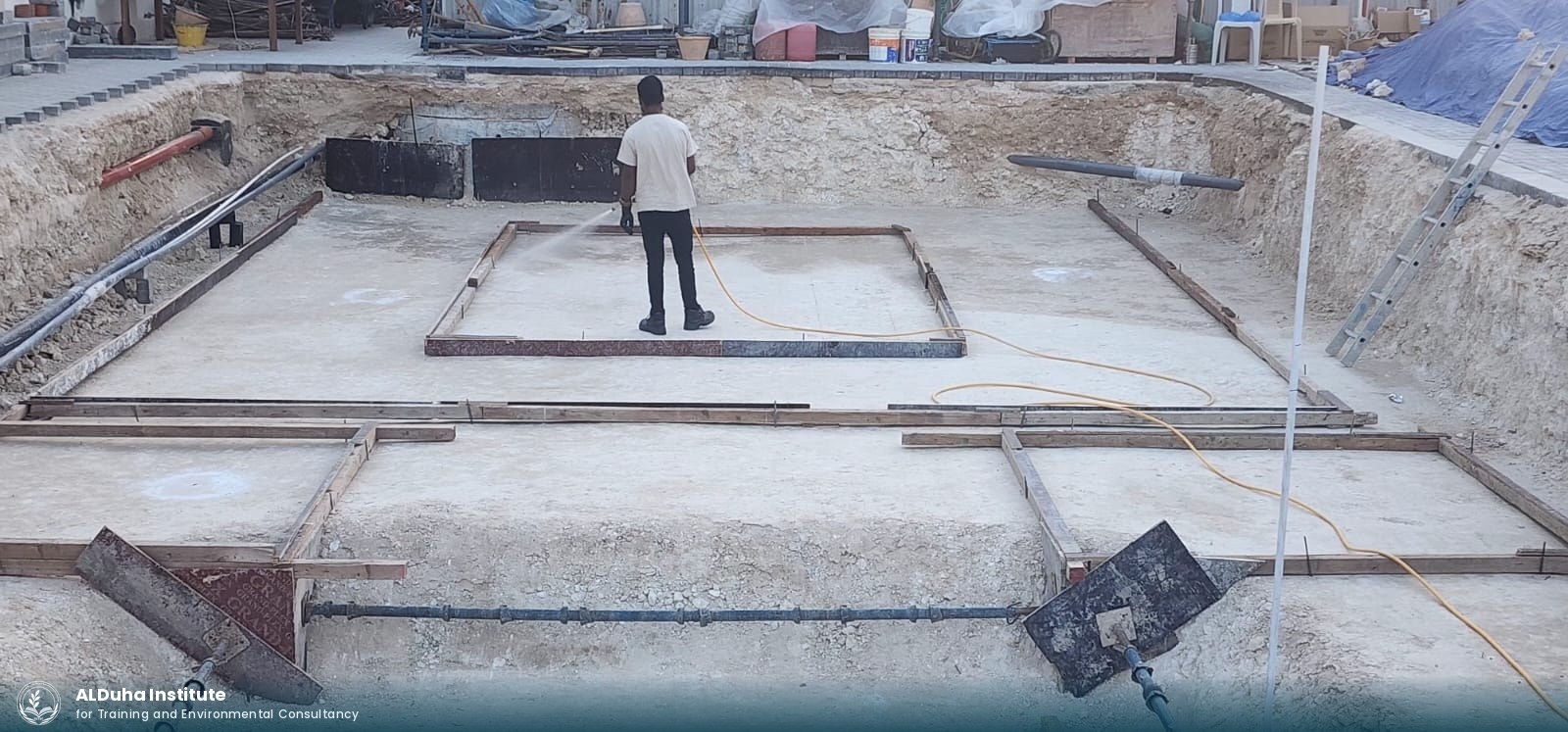
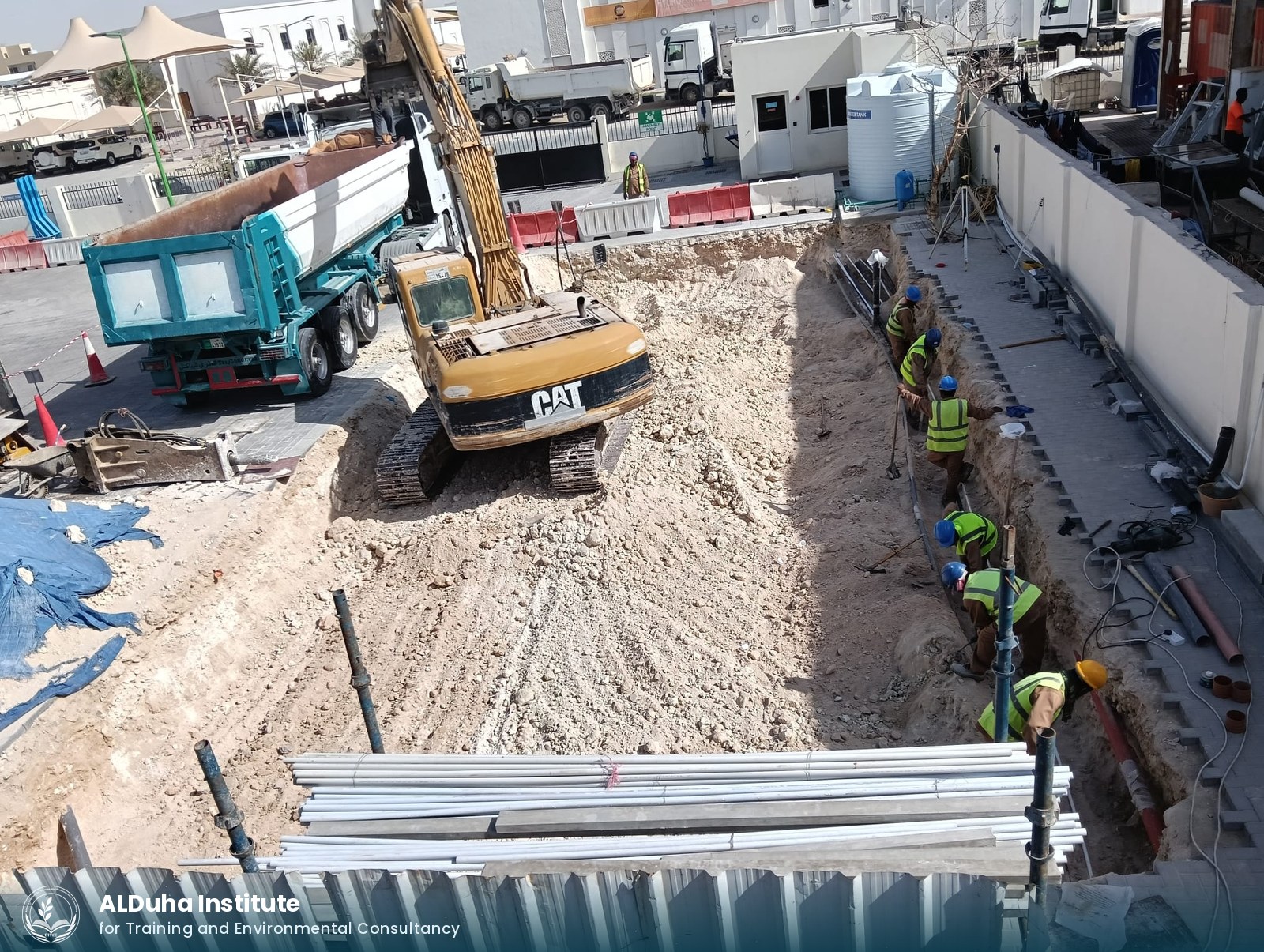
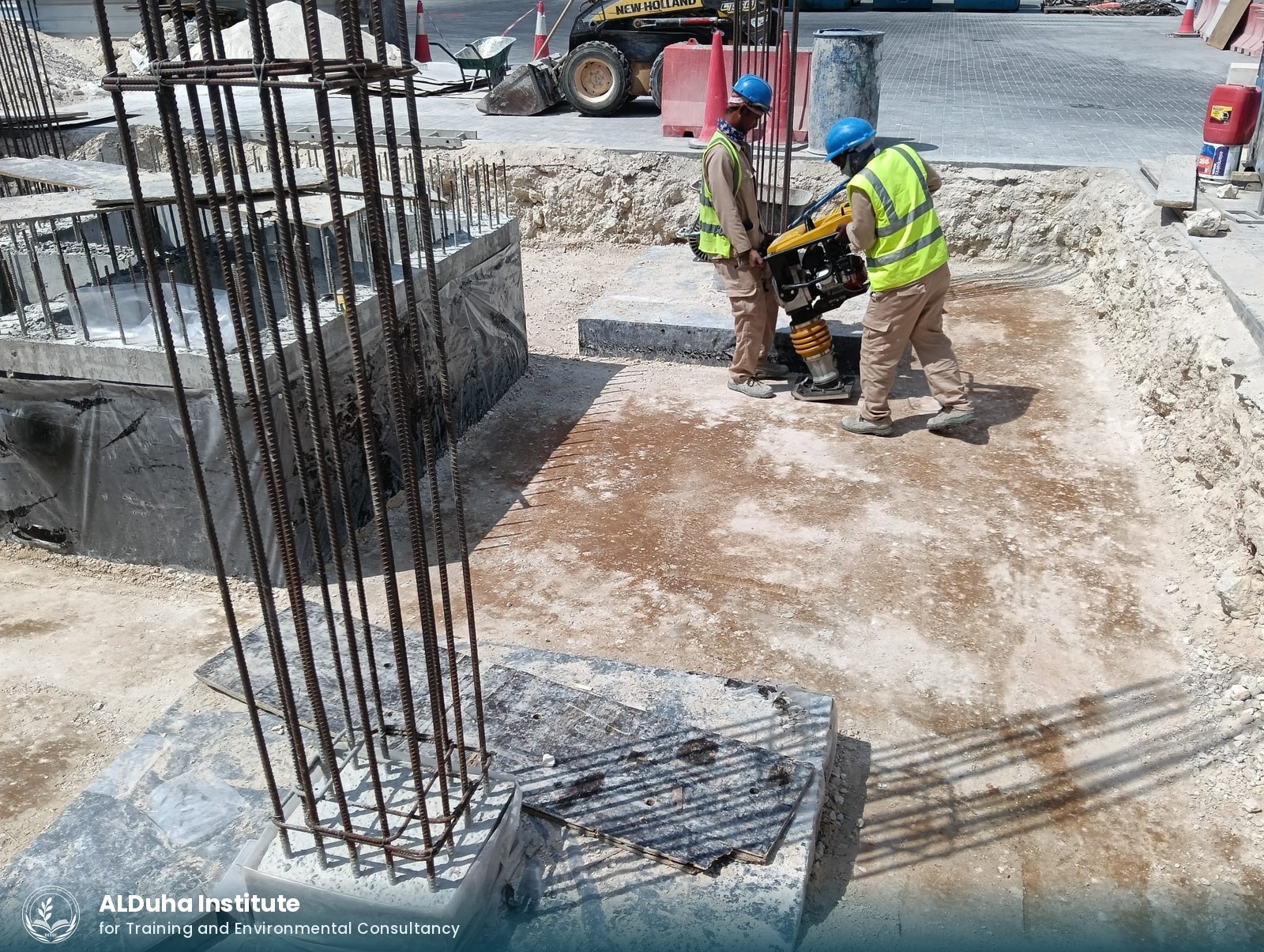
Excavation and foundation setting-out for the shielded source store
Site excavation and service trenching under supervision
Column reinforcement cage set on a cast footing
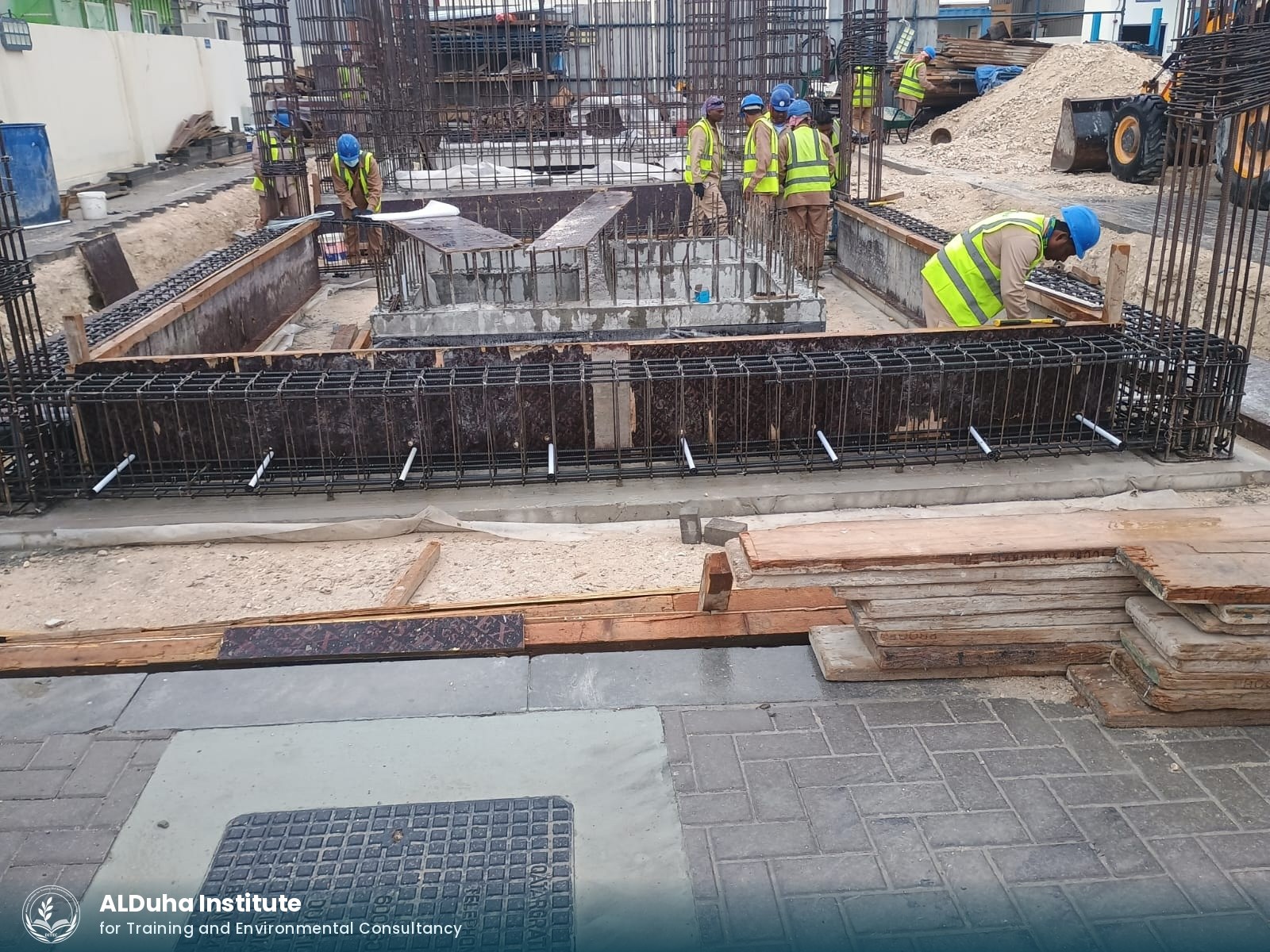
Reinforcement mat for the shielding walls before formwork
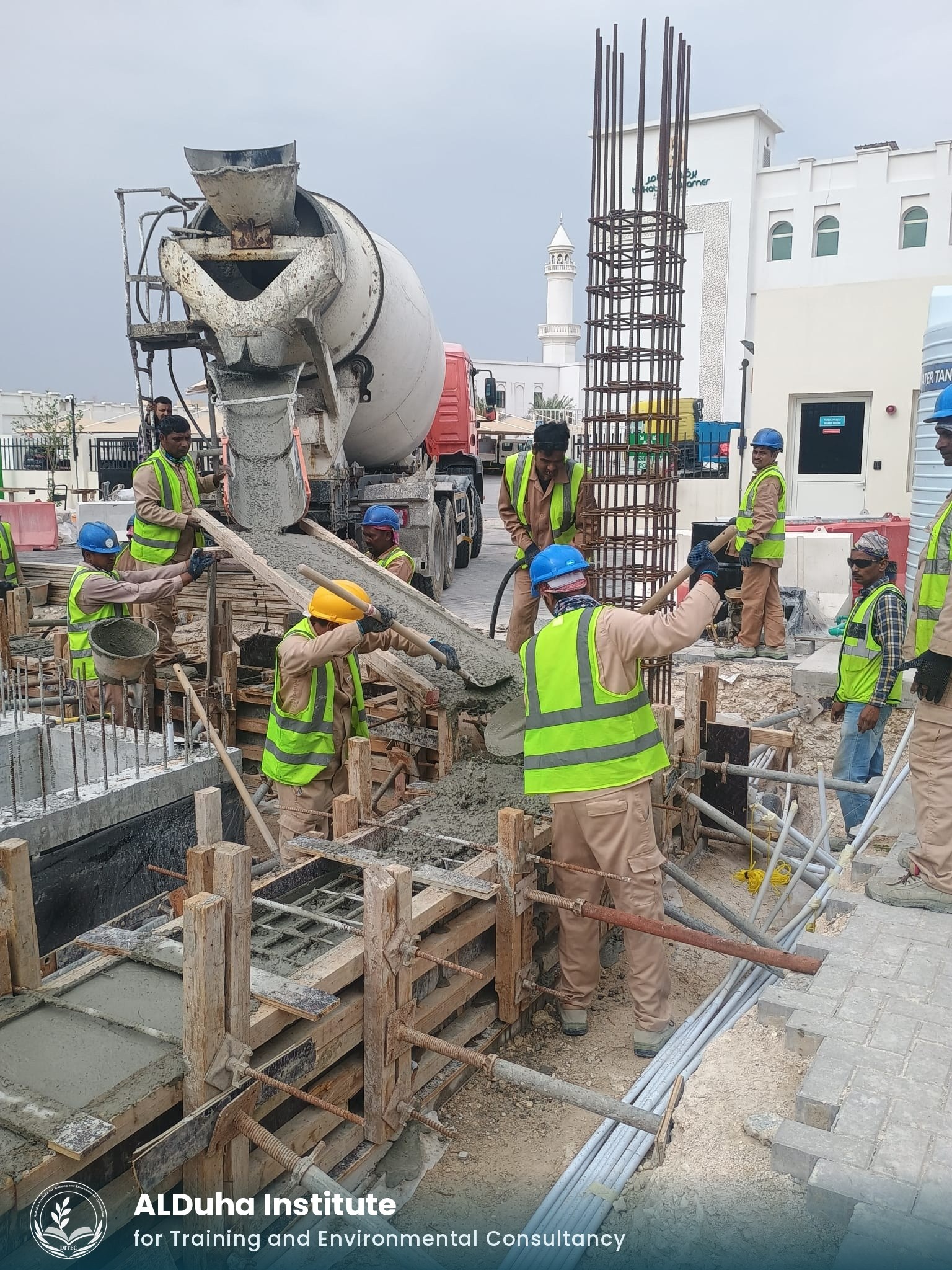
Concrete pour for the shielded store columns
Lined excavation with waterproofing membrane before the base slab
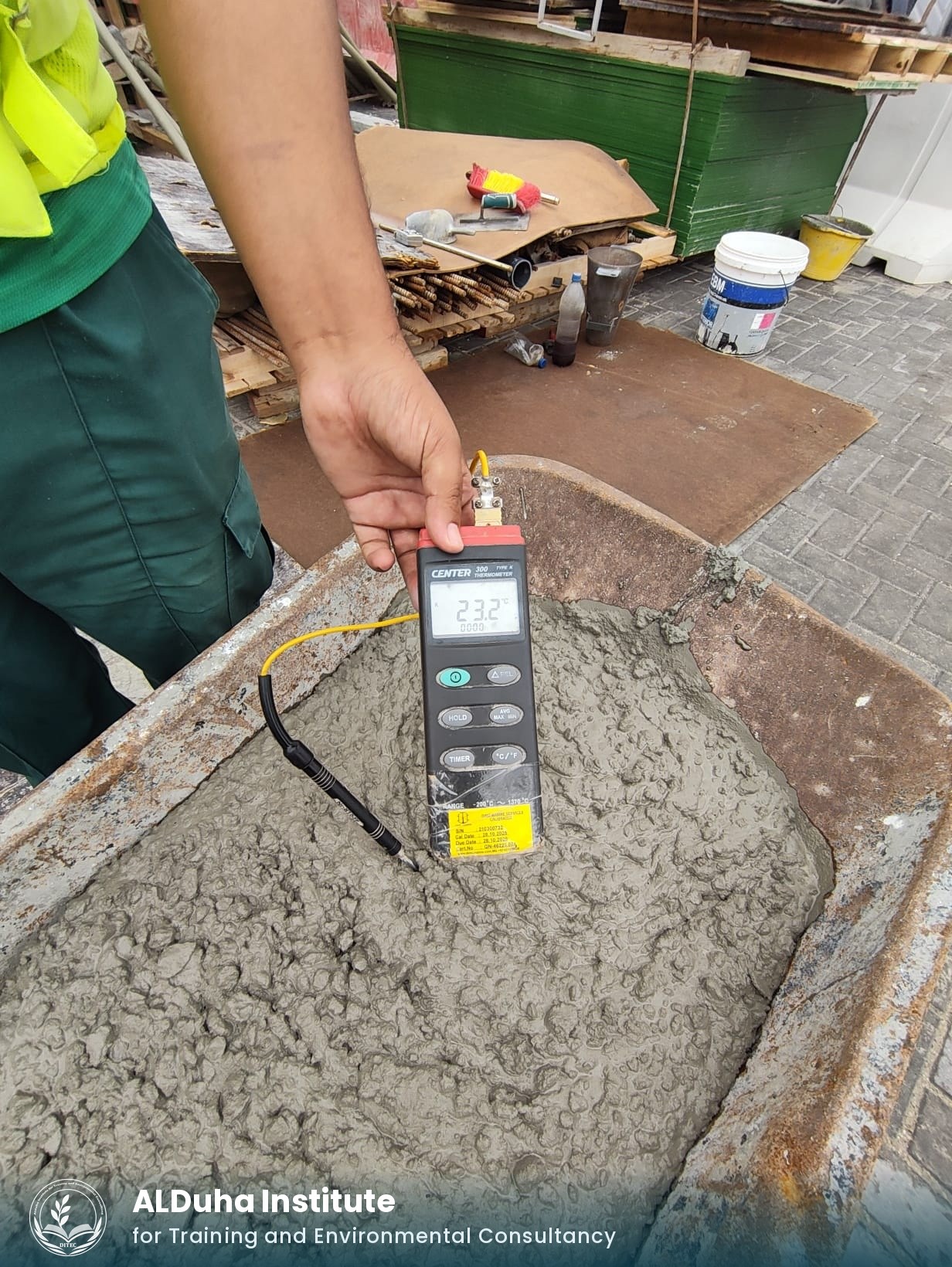
Fresh concrete temperature check during placement (quality control)
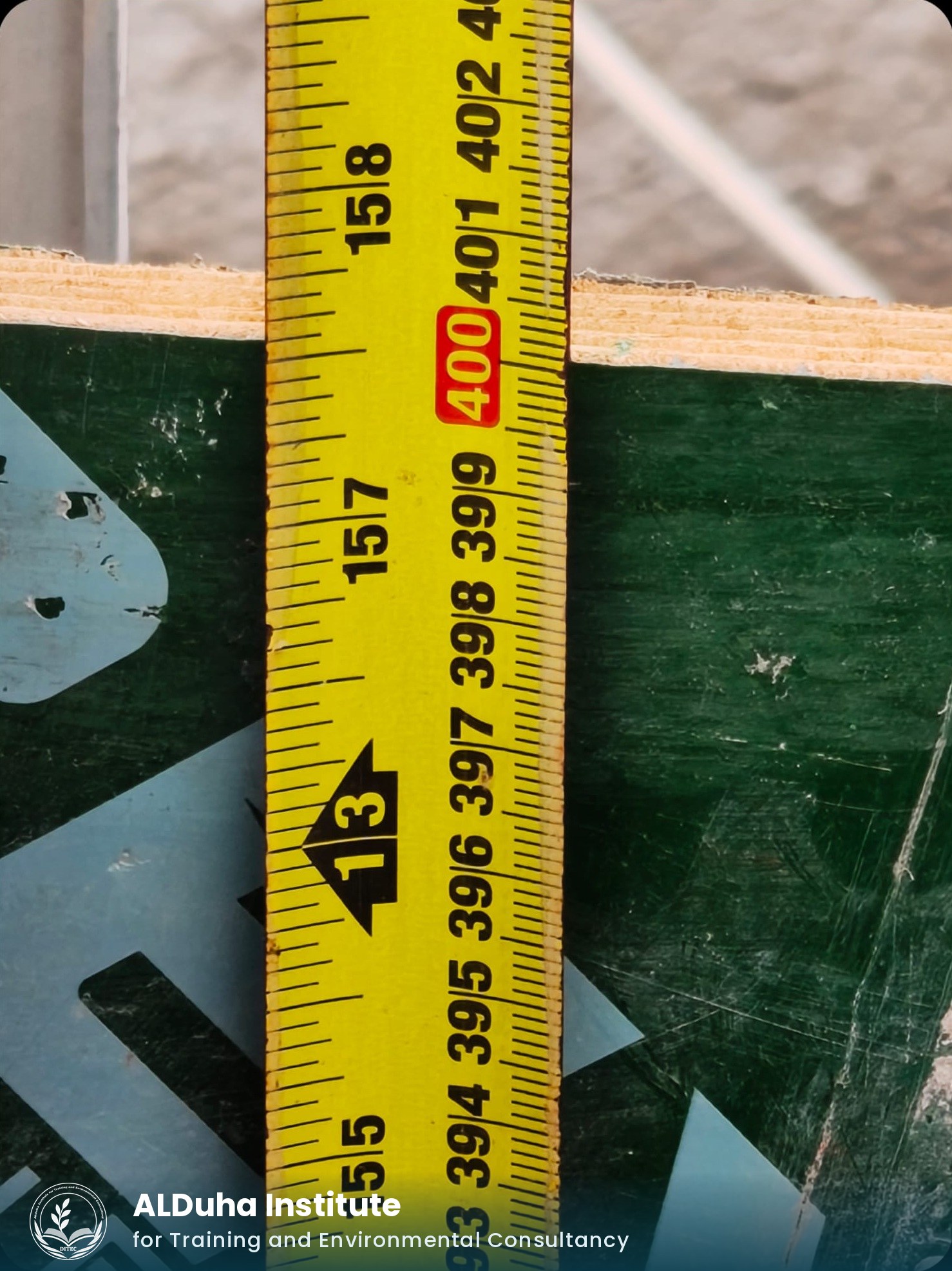
On-site verification of shielding wall thickness - 400 mm
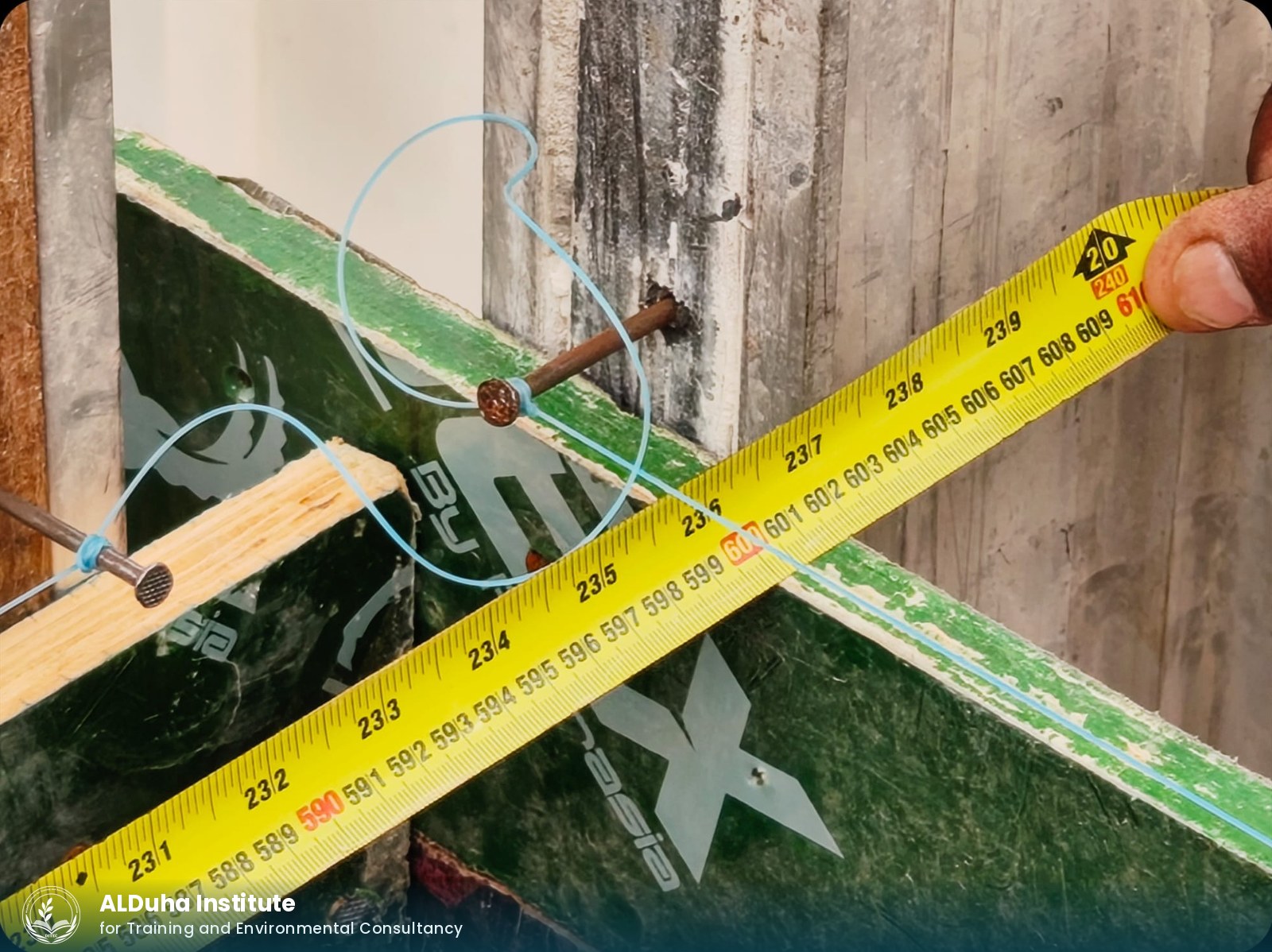
On-site verification of shielding wall thickness - approx. 600 mm
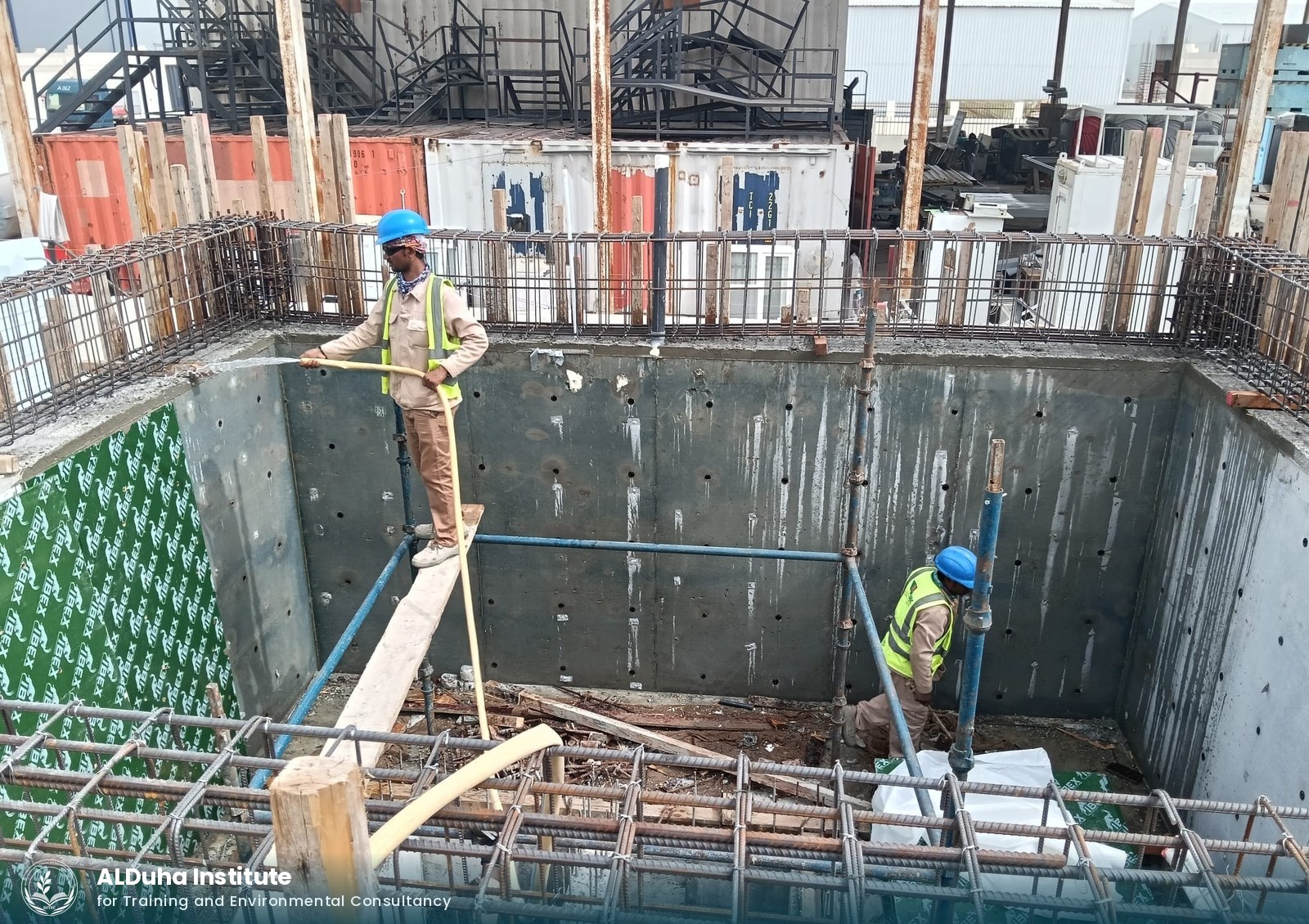
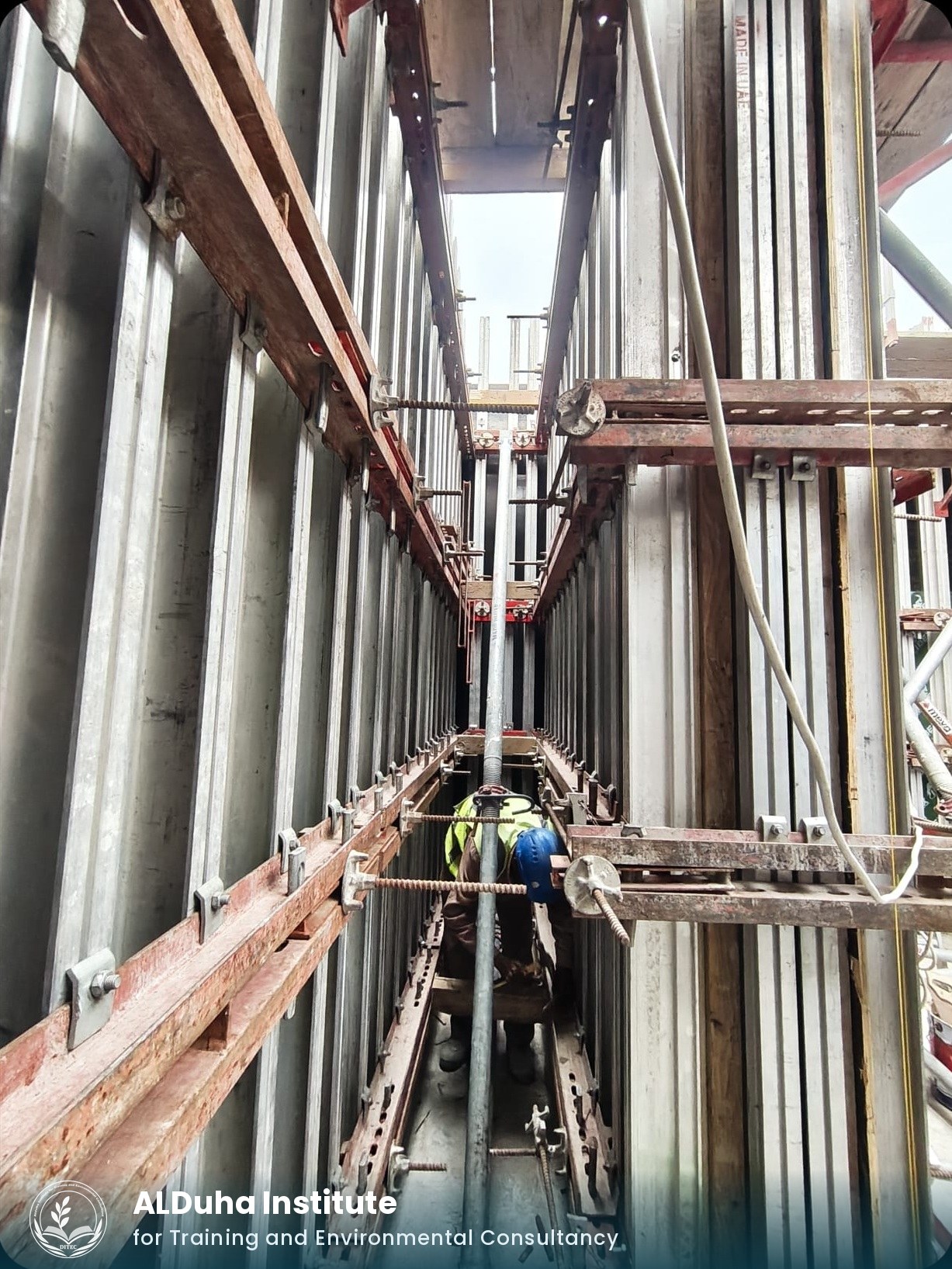
Deep wall formwork for the shielded enclosure
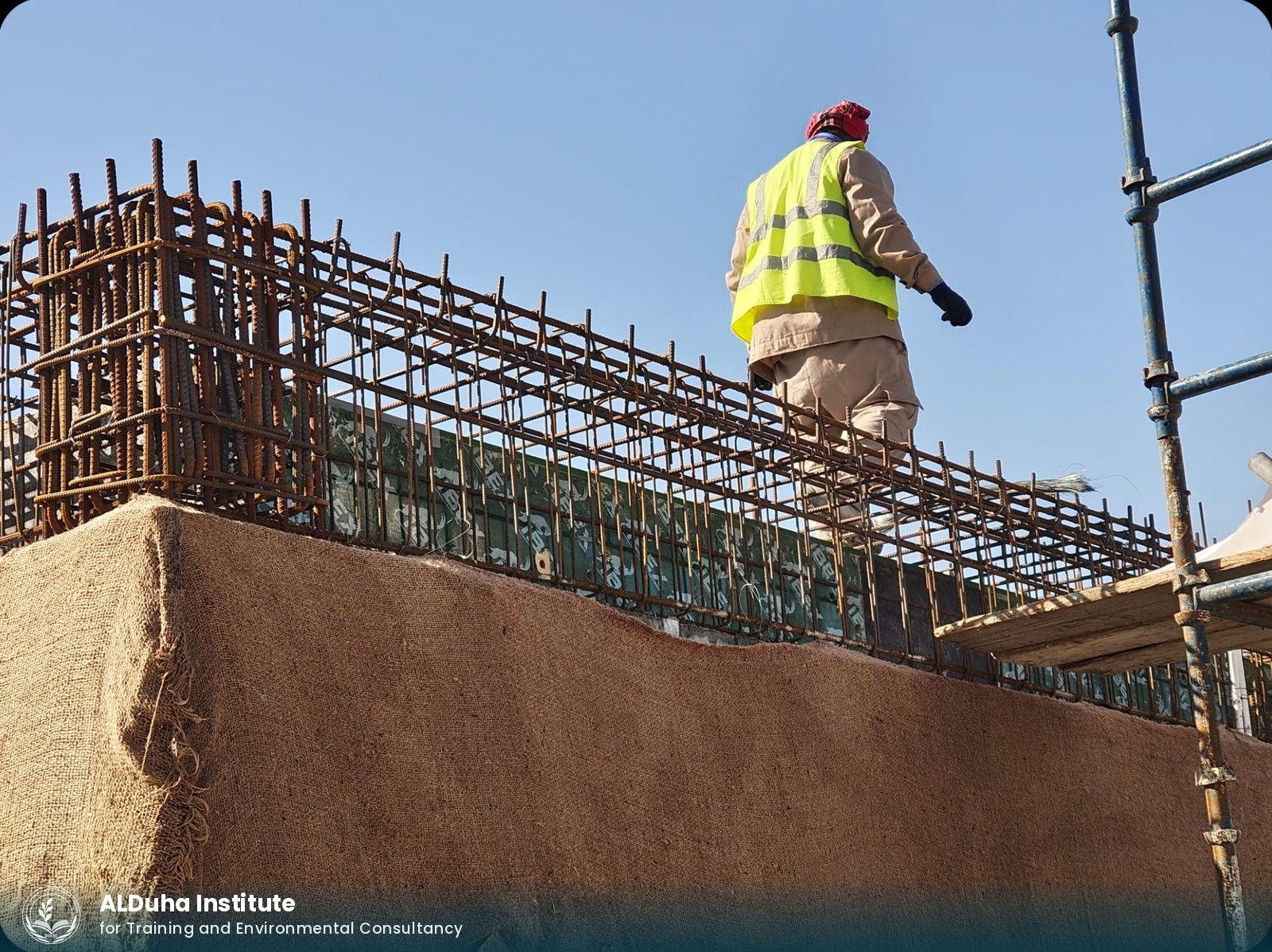
Wall-top reinforcement with hessian curing cover in place
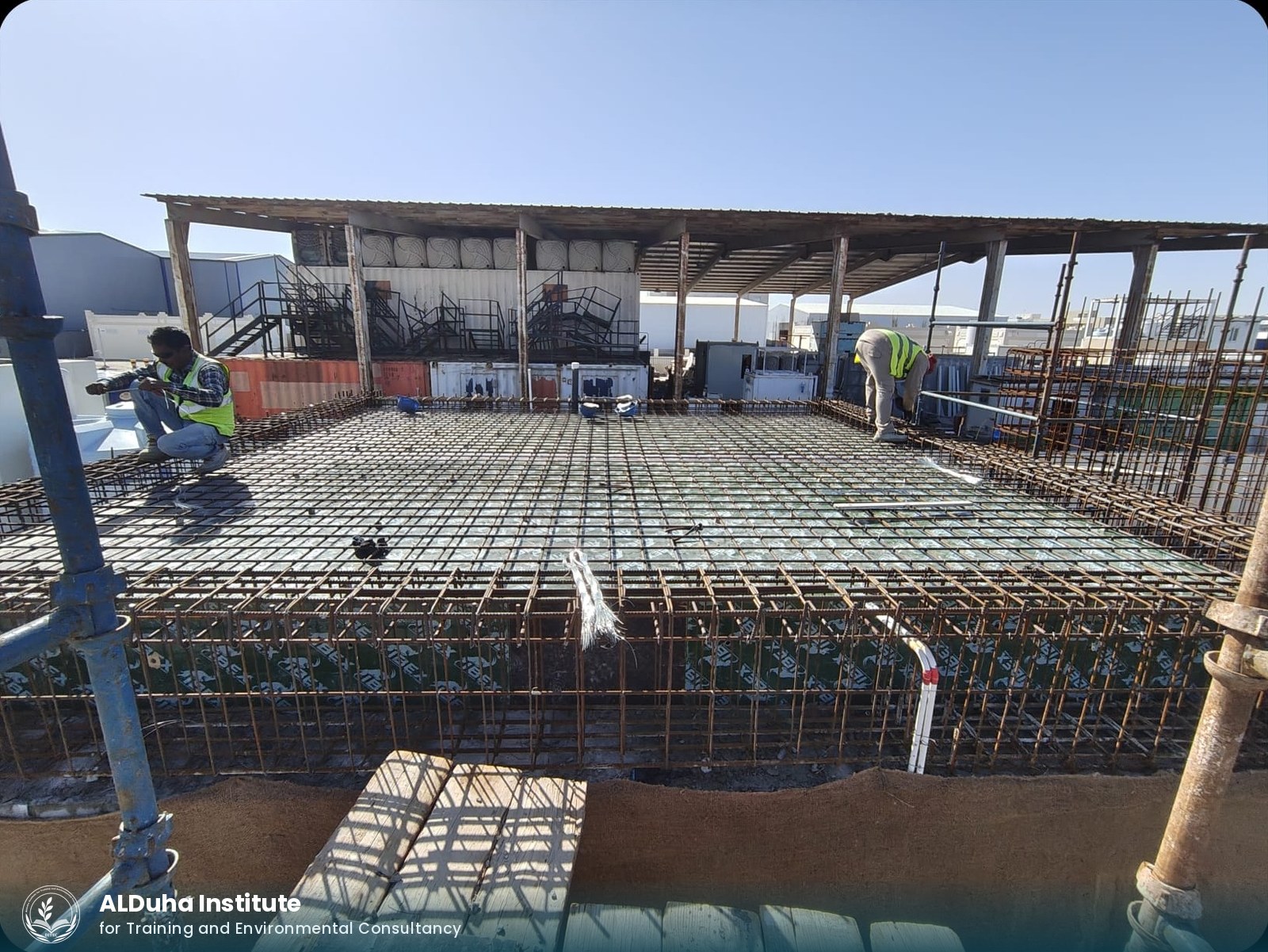
Roof slab reinforcement over the shielded store
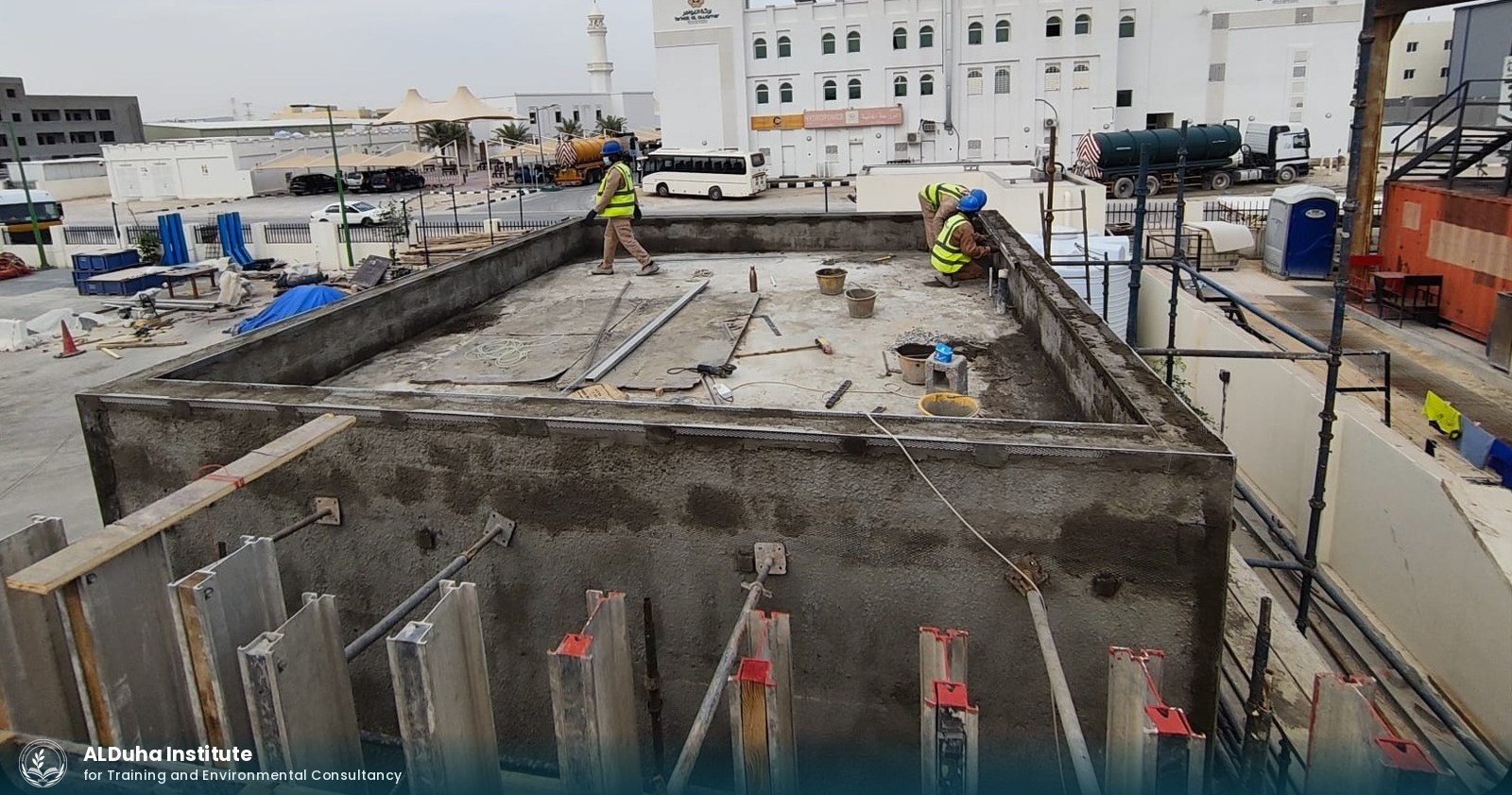
Completed reinforced-concrete shielded structure

The challenge

The contractor needed its own facility to store and inspect industrial gamma radiography cameras holding sealed Iridium-192 sources — IAEA Category 2, the highest category in routine industrial use. There was no existing design to review: the project started from a blank sheet. Every decision — pit placement and depth, wall thickness, where an operator stands — had to be born calculated, because a regulator does not approve thick walls. It approves proof that dose at every occupied point is below the limit and that the design is ALARA rather than merely compliant.

What we did

  • Radiological design from scratch for the source stores and inspection rooms — pit layout and depth, walls and roof, movement routes and operator positions, driven by dose rather than by architecture.
  • Full shielding calculations for every element of the facility, with specification of pit hatches, plate thickness, sealing and locking.
  • Defence in depth built layer by layer: sealed source inside a shielded camera, pit depth, external shielding, secured warehouse, perimeter — which is what kept the specification buildable instead of needlessly over-engineered.
  • Preparation and follow-through of the licensing file with the regulator up to approval.
  • Review of the construction drawings across three disciplines at once — nuclear, radiation protection, civil/architectural — because shielding failures usually surface in an architectural detail, not in the arithmetic.
  • Site supervision against the approved design, because correct shielding on paper can still be built wrong.

The outcome

A facility taken from blank sheet to operation under one roof — design, calculation, licensing and supervision — without the client moving between a designer who does not know the regulation and a consultant who does not know the build. With it, a shielding calculation package signed by a qualified Radiation Protection Officer that stands as permanent evidence at inspection and at renewal.

Standards applied

IAEA SSG-11 · IAEA GSR Part 3 · IAEA NSS-14 · ISO 21482 · Qatar Decree-Law 31/2002 & Bylaw 4/2003

An asset integrity, inspection and HSE services companyServing Qatar's oil and gas sector · more than four decades in the industry
NDT servicesFrom scratchPersonnel licensingSource store

End-to-end licensing pathway — activity registration, personnel licences and source storage

The challenge

A company entering industrial radiography in Qatar. The difficulty here is sequence, not physics: five interlocking licences — commercial activity registration, possession and storage, import, use, transport — each with its own evidence, and filing them in the wrong order means rejection and starting again. Running alongside it, a separate file entirely: qualifying and personally licensing the radiation protection officer and the radiographers.

What we did

  • Mapped the regulatory pathway and its correct order — what precedes what, and why.
  • Itemised the technical evidence each licence requires and split it into what the Institute prepares versus what the client already holds — a split that alone saves weeks.
  • Set out the qualification and personal-licensing route for the radiation protection officer and the radiography operators.
  • Specified the radioactive source store so it clears regulatory review at the first submission.
  • Produced the correspondence and documents bilingually, in the form the regulator works with.

The outcome

A defined licensing roadmap with a fixed scope of work, and a submission-ready bilingual document set — replacing an open-ended process whose cost and duration nobody could state at the start.

Standards applied

Qatar Decree-Law 31/2002 & Bylaw 4/2003 · MOECC Radiation Protection Department licensing requirements · IAEA GSR Part 3

A major Qatari group, through its soil and materials testing armGeotechnical and materials testing laboratories serving infrastructure and construction projects in Qatar
Nuclear gauges · Cs-137 and Am-241/BeFrom scratchStore designEnvironmental permitDesign approval

Nuclear gauge storage facility — two regulators, one sequence that does not tolerate error

The challenge

Twenty nuclear gauges holding Cs-137 and Am-241/Be sources needed a purpose-built store inside a logistics park. Two regulators, not one: an environmental permit first, then design approval from the Radiation Protection Department, then construction. And one administrative detail that sinks whole files when missed — the land lessee and the operator of the sources are different entities, and that distinction has to hold across every letter and every signature.

What we did

  • A full shielding design report for the store — pit storage in two rows, reinforced concrete walls, security door and perimeter fence — calculated to 20 µSv/week for members of the public and 100 µSv/week for workers, ALARA-compliant.
  • A thirteen-document submission package, all bilingual: storage data, transport data, material data, operational process charts, project data for both construction and operational phases, and the formal letters to both authorities.
  • An explicit statement inside the file that the hazard is radiological and not chemical — obvious on paper, and in practice the single thing that most often confuses and delays an environmental permit form.
  • Alignment of the signing and corresponding entity in every document with the legal position on land and on operation.

The outcome

A complete, submitted package and a defined regulatory sequence in place of guesswork — the client knowing at every step which authority is next and what it will ask for.

Standards applied

IAEA GSR Part 3 · IAEA SSG-11 · Qatar Decree-Law 31/2002 & Bylaw 4/2003 · MOECC environmental permitting

A petroleum construction and projects contractorEPIC projects, maintenance and shutdowns at Qatar's major petroleum facilities · established in the 1980s
Petroleum services · Ir-192Existing facility re-assessmentShielding calculations

Re-assessment of operating inspection rooms: is what is already built actually sufficient?

The challenge

Unlike the others, these inspection rooms were already built and already operating. The question was not how to build, but the harder one: is what exists sufficient for the source activity actually in use today? A working facility cannot live with an estimate — either there is calculated evidence of sufficiency, or there is a commitment to modify.

What we did

  • Re-assessed the inspection rooms against the real activity of the Ir-192 sources in use and the measured dose rates, rather than against the original design assumptions.
  • Produced full shielding calculations covering walls, roof, entrances and the operating positions where people actually stand.
  • Issued the report in the Institute's approved format and identity while preserving every technical value verbatim — source activities, dose rates, calculations and references untouched by the formatting.
  • Completed document control before expert and director sign-off.

The outcome

A signed shielding calculation report that stands as regulatory evidence for continued operation — precisely what an operating facility is asked for at inspection or at renewal, and precisely what cannot be produced in a day.

Standards applied

IAEA GSR Part 3 · IAEA SSG-11 · NCRP shielding methodology · Qatar Decree-Law 31/2002 & Bylaw 4/2003

Three of the four were built from a blank sheet and the fourth was an assessment of an operating facility. All work was carried out under the Institute's radiation protection consulting accreditation issued by the Ministry of Environment and Climate Change — covering shielding calculations, radiation protection programmes, emergency plans, review of facility drawings, and applied research consulting.