
TLD, OSL and Electronic Dosimeters: Which One You Need
 September 17, 2026
 7 min read
 DITEC Experts, Radiation Protection Team, ALDuha Institute for Training and Environmental Consulting
Two families, two jobs
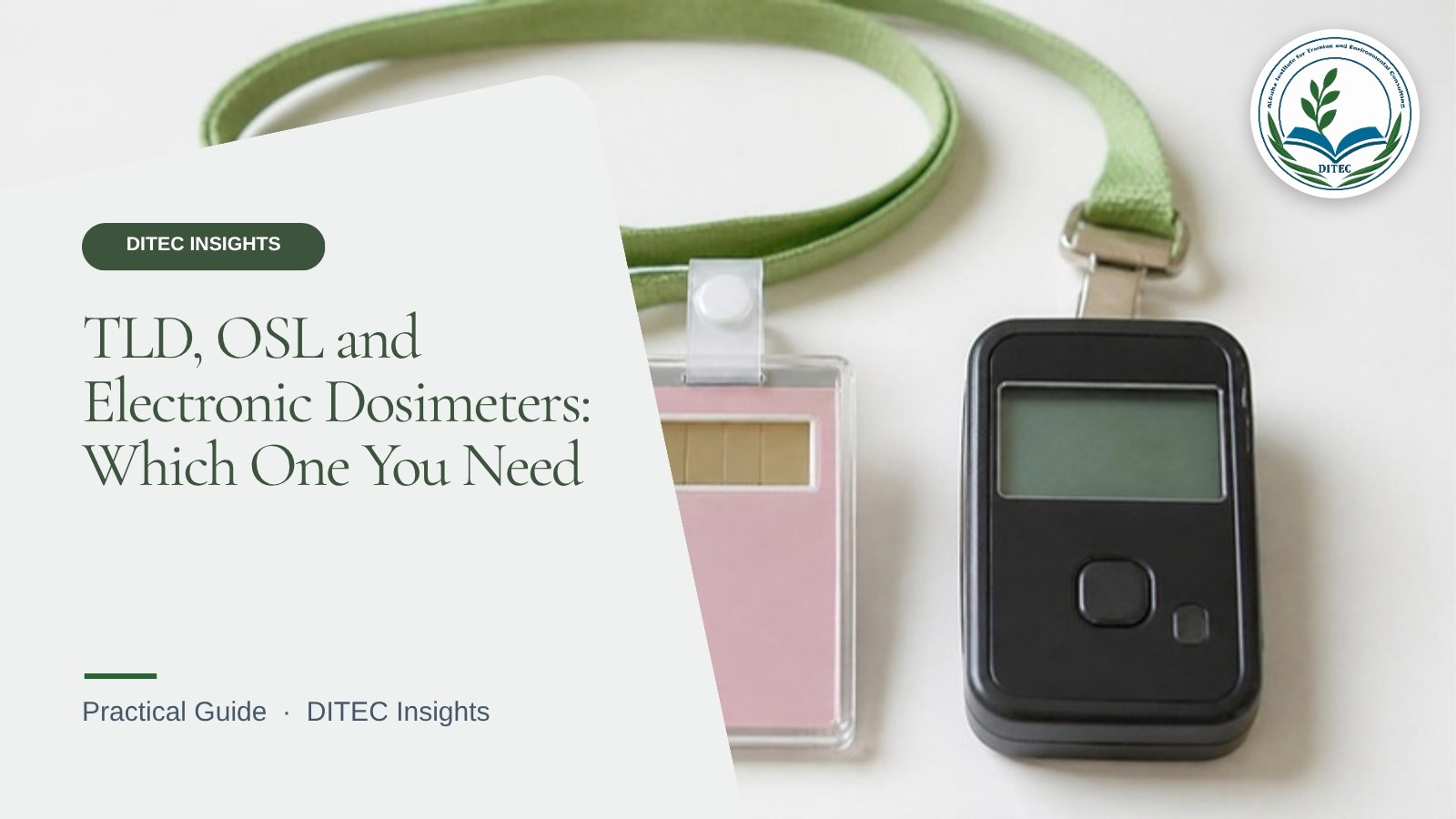
Personal dosimeters split into two families that answer different questions. A passive dosimeter — the badge — stores the dose and is read later by an approved service; it answers what dose this person received over the wear period, and it is the legal record. An active dosimeter — the electronic one — shows a live reading and alarms; it answers what is happening to me right now, and it is a working tool.
Confusing the two causes both of the classic mistakes: relying on a badge to warn you during a job it cannot warn you about, and treating an electronic reading as the official dose record.
How they compare
The practical answer for most facilities is not one or the other. It is a passive badge for everyone who needs a dose record, plus an alarming electronic dosimeter for the people who work close to a source and need to know the moment something changes.
| TLD | TLD | OSL | Electronic (EPD) |
|---|---|---|---|
| Principle | Heating the crystal releases stored energy as light | Laser light stimulates the stored signal | A semiconductor detector reads in real time |
| Reading | By the dosimetry service at the end of the period | By the dosimetry service; the element can usually be re-read | On the display, immediately |
| Alarm | None | None | Audible on dose and dose rate |
| Legal dose record | Yes | Yes | Normally supplementary |
| Typical use | Routine monitoring across a facility | Routine monitoring, with re-reading useful in disputes | Radiography, interventional work, maintenance near sources |
When the standard badge is not enough

Getting a reading that means something
None of this is bureaucracy. A dose record with gaps is the document a facility cannot fix retrospectively, and it is the one that matters most on the day a worker asks what they were exposed to.
- Worn on the trunk at chest or waist level, facing the source, and under the apron when one is used.
- One badge per named person, never shared or swapped between shifts.
- Left at work in a designated rack, away from any source and away from heat and sunlight.
- Returned on the exchange date; a late badge becomes an unreported period in the worker's record.
- Loss, damage or accidental exposure reported at once, so the period can be assessed instead of left blank.
Frequently asked questions
Can an electronic dosimeter replace the badge?
Normally no. The official dose record comes from an approved dosimetry service reading a passive dosimeter. The electronic one is there to warn and to manage work in real time, and the two are used together rather than as alternatives.
What is the difference between TLD and OSL in practice?
For the wearer, very little — both are badges worn the same way. The practical difference is on the service side: the OSL element can usually be re-read, which is useful when a result is queried, while TLD reading releases the stored signal.
How long is a wear period?
Monthly or quarterly are the common cycles, chosen according to the expected dose and the facility's licence conditions. Higher-exposure work generally justifies a shorter cycle, because a problem is found weeks earlier.
A badge was left near a source by mistake. What now?
Report it immediately and in writing, before the reading comes back. An investigated and documented handling error can be assessed and set aside; the same high reading with no record attached looks like an uncontrolled exposure and is treated as one.
Supply, training and advice
ALDuha Institute for Training and Environmental Consulting advises facilities in Qatar on setting up personal monitoring, supplies radiation measuring instruments, and trains radiation protection officers to run the programme and act on what the readings say.