
Radiological Emergencies: The First Thirty Minutes
 September 17, 2026
 8 min read
 DITEC Experts, Radiation Protection Team, ALDuha Institute for Training and Environmental Consulting
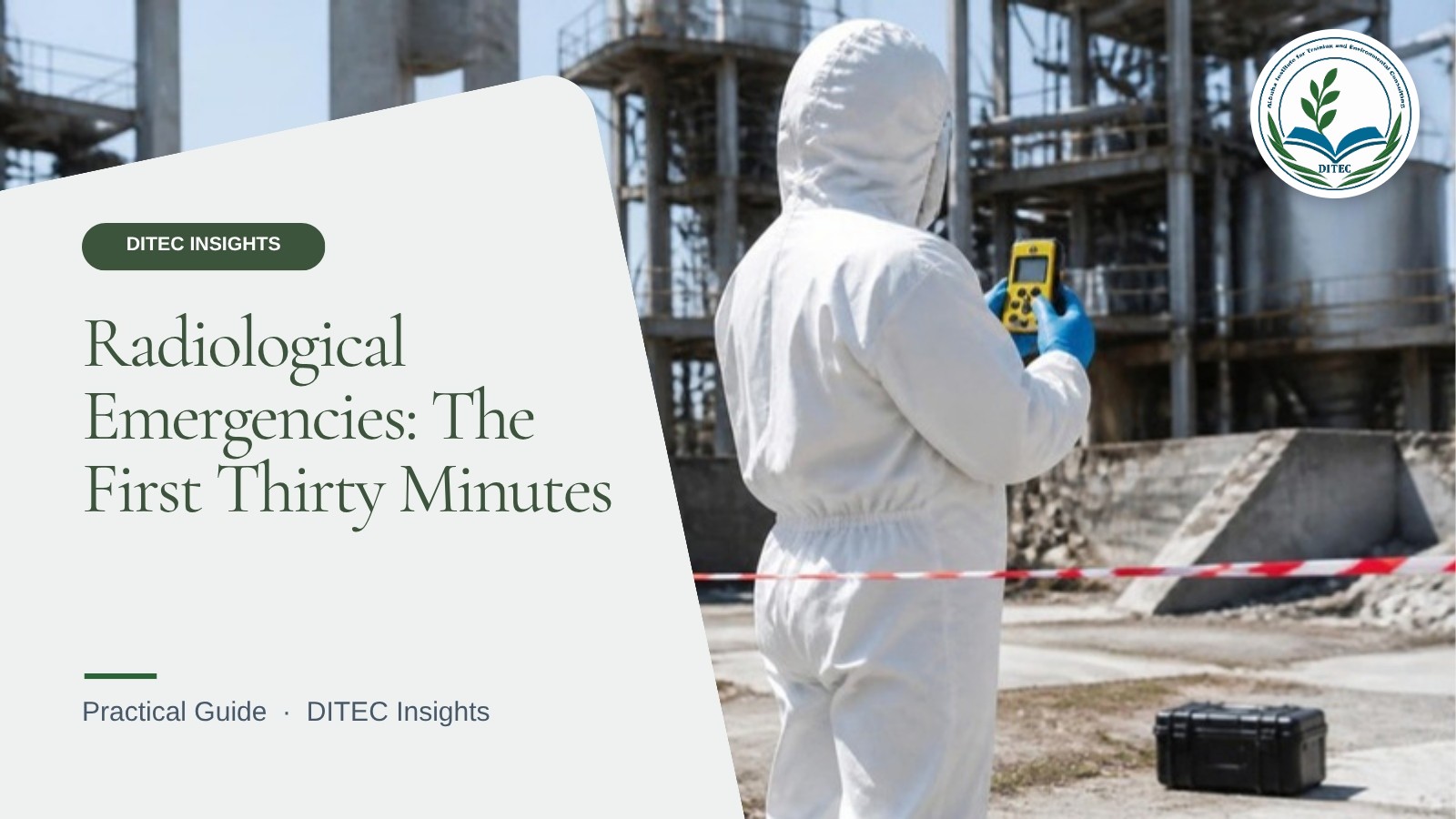
Plan for what actually happens
Most facility emergency plans are written for a disaster that will never occur and say nothing about the five events that actually do. A plan is useful only if the person who finds the problem at two in the morning recognises their situation in it.
The five that matter
- A source that does not return to its shielded position in an exposure device or a gauge.
- A source or a gauge that cannot be accounted for — missing, or possibly stolen.
- Damage: equipment run over, dropped, caught in a fire, or a package that arrives crushed.
- Suspected contamination, a spill of unsealed material, or a person who may have been contaminated.
- A suspected overexposure — a dosimeter alarm, a high reading, or someone who entered a controlled area during an exposure.
The first thirty minutes
The opening half hour decides whether an incident stays small. Four actions, in this order, cover almost every scenario above.
People come before the source
If someone is injured, they are treated and evacuated first. Radiological concerns are managed around the medical response, and the treating team is told what they are dealing with — never left to discover it later.
The instinct to fix it is the danger
The most serious radiography injuries recorded worldwide share one feature: a competent person walked towards a source to sort the problem out quickly. Withdrawing and calling for a planned recovery is not caution; it is the procedure.

What belongs in the emergency kit
And one thing that is not equipment: a drill. A plan that has never been walked through is a document, not a capability — and the gap between the two only ever shows up on the night it matters.
- An operable, calibrated survey meter with spare batteries, checked on a schedule rather than when needed.
- Barrier tape, cones and warning signs in Arabic and English.
- The written procedure and the call-out list with numbers that are current this year.
- A forms pack for recording times, readings and names.
- Long-handled tools and shielding only where the facility's plan includes recovery by its own trained team.
Frequently asked questions
Who must be notified, and how quickly?
The facility's radiation protection officer immediately, and the regulatory authority within the period stated in the licence conditions. Reportable events are defined in those conditions, and a facility that is unsure whether an event qualifies should report it rather than decide quietly that it does not.
Can we recover a stuck source ourselves?
Only if the facility has a written recovery procedure, trained people and the equipment for it — and even then, only after the situation has been assessed with a survey meter from a safe distance. Improvised recovery is how serious injuries happen.
How often should the plan be exercised?
At least annually, and after any significant change — new equipment, a new store, a new shift pattern or a substantial change of staff. A short walk-through of one realistic scenario is worth more than a long document nobody has opened.
What happens after the incident is closed?
A dose assessment for anyone who may have been exposed, a written investigation of the cause, corrective actions with owners and dates, and an update to the procedure if the event revealed a gap. An incident that changes nothing will happen again.
Training and consulting
ALDuha Institute for Training and Environmental Consulting helps facilities in Qatar write emergency arrangements that match their real operations, trains the staff who will act on them, and runs the scenario walk-throughs that turn a document into a capability.